01
Set Gemini as the default model and secured immersion through purpose-specific personas
PROBLEMExisting language AIs stay locked as a "safe tutor," and the conversation goes nowhere
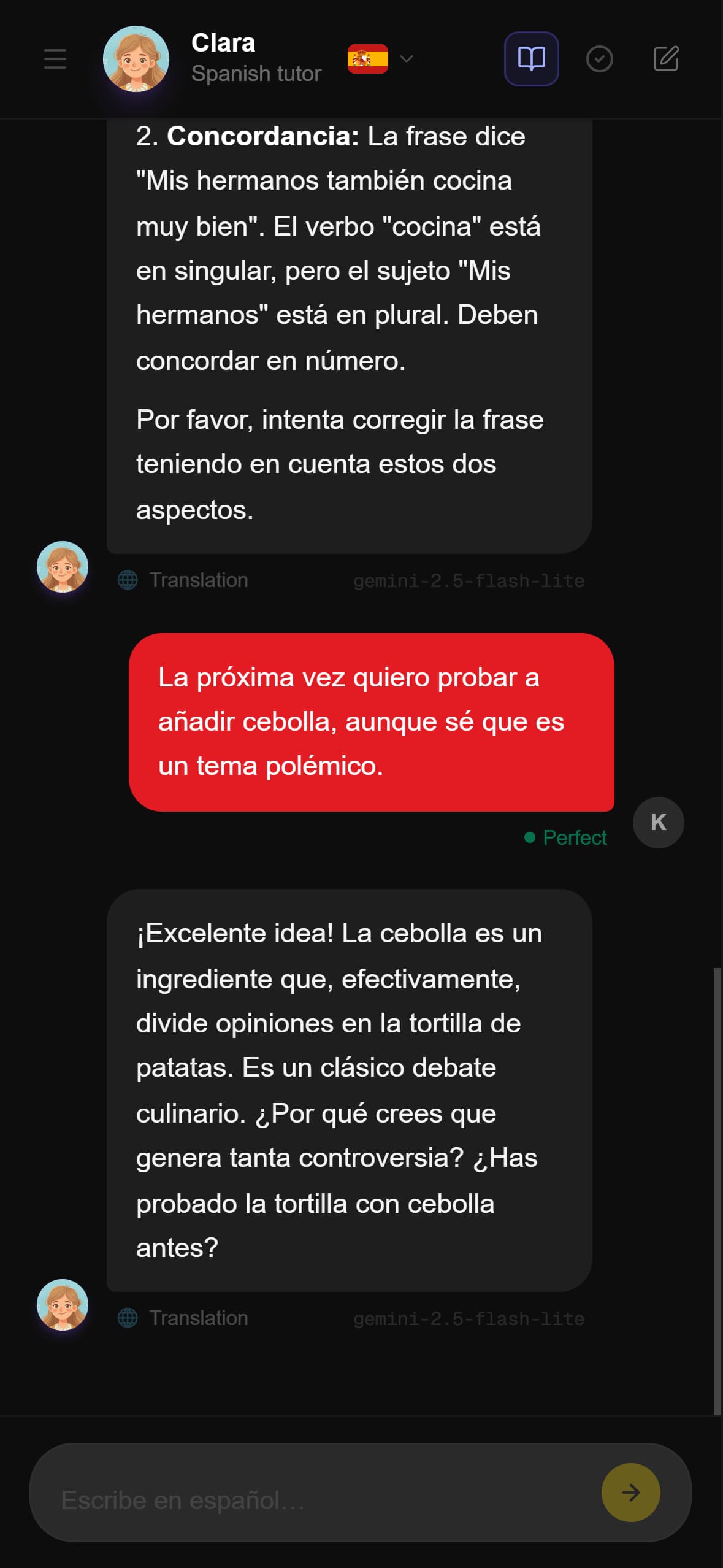
I weighed the trade-offs of token cost, response speed, and context resolution. Early on I implemented automatic model switching based on how complex the context was, using Mistral and Llama in the low-cost tier. In practice, though, their response stability and cost efficiency fell short of expectations and didn't justify the complexity of switching, so I reworked it to fix Gemini as the default. Treating conversational immersion itself as the axis of differentiation, I built it to switch personas according to the user's purpose.
→Dynamically optimizes tone and vocabulary level for each stage of learning
02
Ran error processing asynchronously from the conversation, designing a UX where weakness analysis piles up before you notice
PROBLEMBuilding feedback collection into the conversation flow directly erodes immersion
I made error processing run asynchronously from the main conversation flow, so detailed weakness data accumulates without the user ever being aware of it.
→Never interrupts the conversation, translating directly into higher retention
03
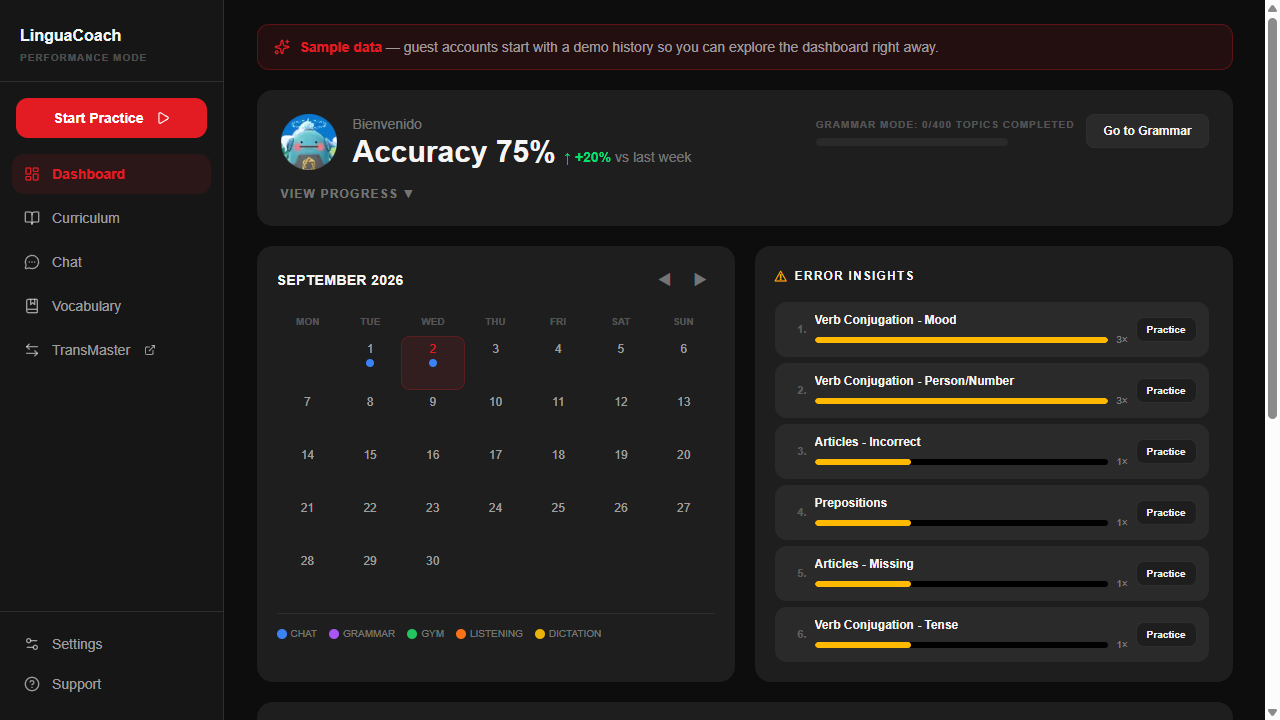
Turned the DELE syllabus directly into features, replacing the language school with a product
PROBLEMThe structural problem of wanting to learn systematically while language schools offer poor value
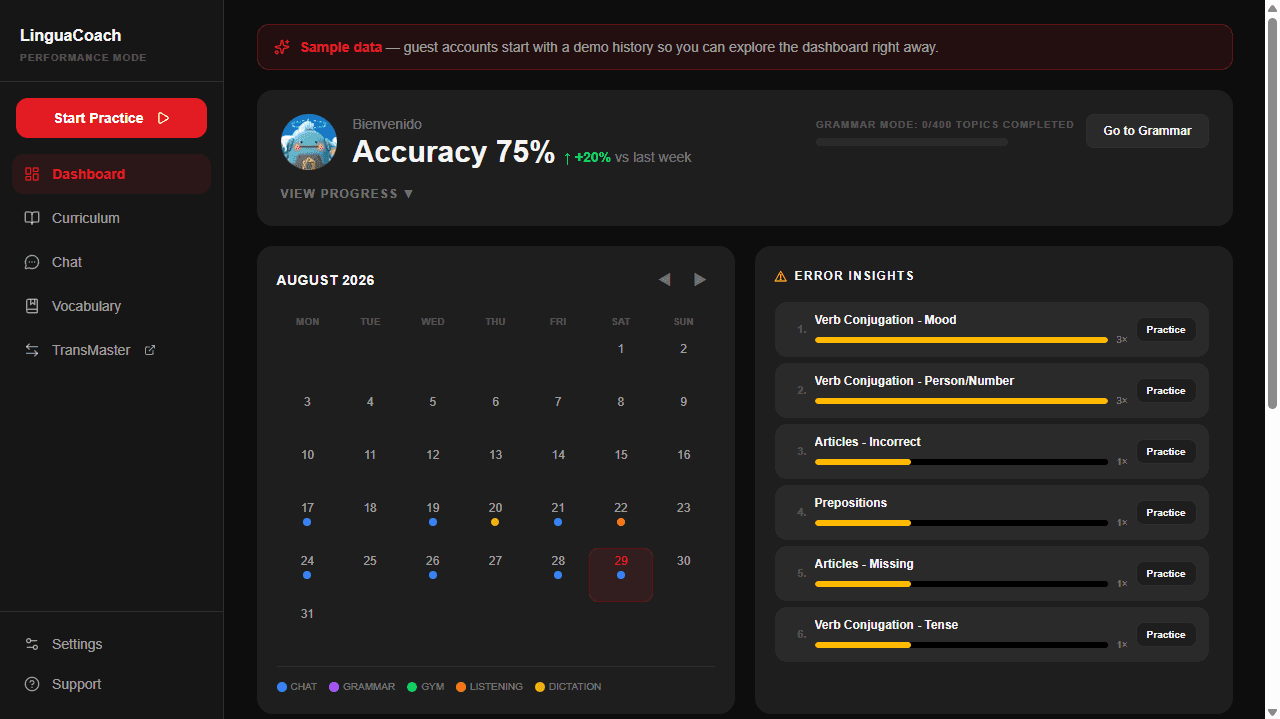
I structured the international-standard DELE curriculum as features. Rather than stopping at delivering material, it integrates AI dialogue, progress tracking, and session resuming.
→A scalable design that extends to other languages and certifications with the same structure (currently Spanish B1 and B2)